 Your design here
Design it right now
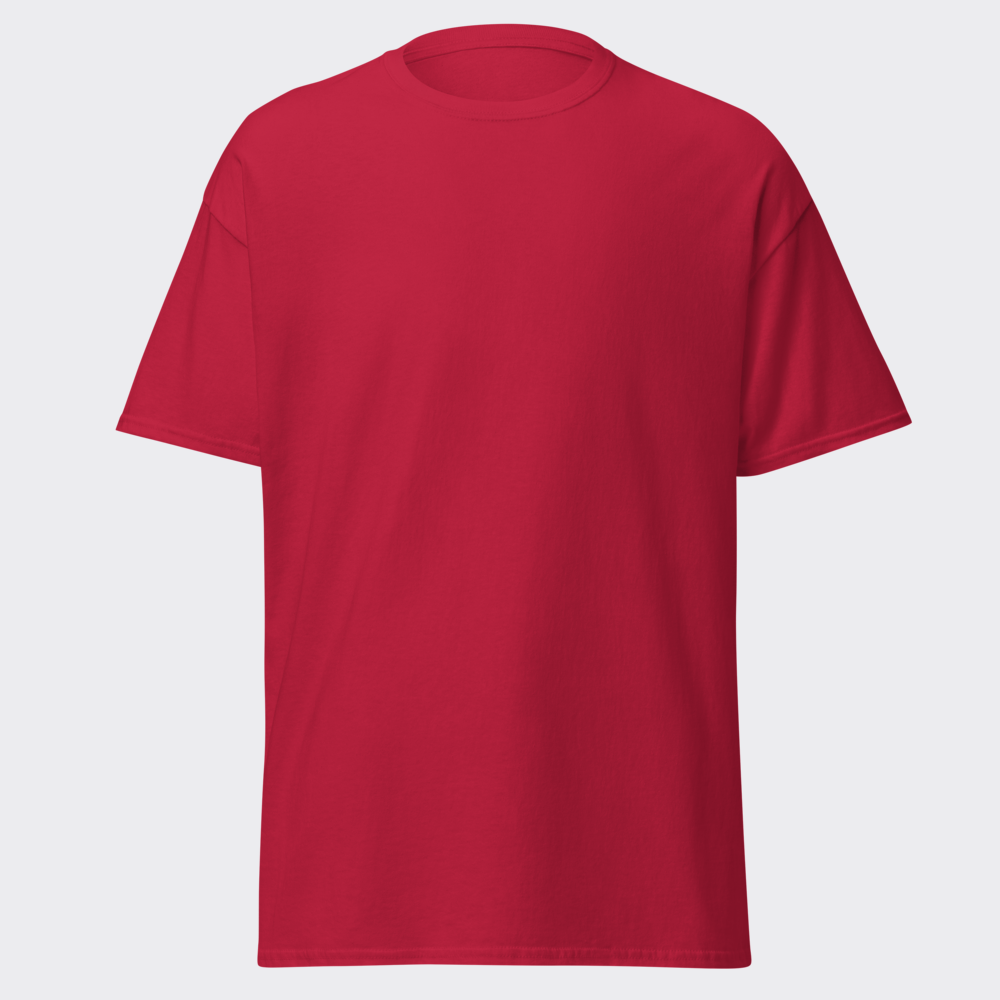
Classic Tee — with YOUR design on it
Upload art, type text, or let the AI design it — live preview, no minimums, pay over time, ships in 5–9 days.
Split eligible US orders into 4 interest-free payments with Shop Pay
🎨 Put my design on this →Gildan 5000 · 100% cotton · 5.0–5.3 oz/yd² (170-180 g/m²) · blank sourced from Honduras · printed in the USA network · ships 5–9 days
Garment colour decides whether a design reads from across a room, and choosing it after the design is finished is the most common reason a custom apparel order disappoints. Ready to start? custom shirts.
Why does colour need deciding first?
Because contrast is what makes a design visible at distance, and contrast is a relationship between the artwork and the garment rather than a property of either. A design finished in isolation and then placed on whatever shirt was preferred frequently ends up with almost no tonal separation - which looks fine on a bright screen and reads as a smudge in a room.
Which colours are safest?
Black, white and heather grey, in that order, because almost any artwork carries enough contrast against them. Mid-tone colours are the risky ones - a mid-blue design on a mid-green shirt can be technically different and visually identical at three metres. If the design is not settled, a safe garment colour buys you room.
How does print method change it?
Printing on dark garments requires an underbase layer of white ink beneath the colours, which affects how bright and how soft the result is. Embroidery is unaffected by garment colour because thread sits on top, which is one reason embroidery is more forgiving on unusual colourways.
Safe choices by situation
- Design not settled - black or white. Almost anything reads against them
- Detailed colour artwork - white or light heather, where colours stay true
- Logo only - any colour, especially embroidered
- Avoid - mid-tone design on a mid-tone garment. No separation at distance
Is there really no minimum order?
None. One piece is a real order at normal pricing with no small-order surcharge. Traditional printers set minimums because screen printing and machine embroidery both carry a fixed per-job setup cost that has to be spread across enough pieces to be worth doing. Print-on-demand production has no per-job setup, so the reason for the minimum simply does not exist - which is why ordering one to check it before committing the budget is the standard advice here.
How does bulk pricing work?
It applies itself in the cart. Twenty or more of the same item takes 20% off, fifty takes 25%, and two hundred takes 30%. There is no quote form, no promo code and no sales call - the cart is the quote, so you can see the final per-piece number before anyone pays. Because these are print-on-demand costs rather than screen-printing setup, the discount is an honest reduction on the listed price instead of a marked-up retail figure being walked back.
Where to go next
Ordering one piece to see the colour in daylight costs one garment and settles the question. See the full design checklist.
See the merch in real life
Real garments, printed and embroidered to order.
Frequently asked questions
Should I pick the design or the garment colour first?
Together. Contrast is a relationship between them, not a property of either.
Which garment colours are safest?
Black, white and heather grey. Almost any artwork carries enough contrast against them.
Which combinations fail?
Mid-tone designs on mid-tone garments - technically different, visually identical at distance.
Does print method matter?
Yes. Dark garments need a white underbase under printed colour; embroidery is unaffected by garment colour.
How do I check before committing?
Order one piece and look at it in daylight. No minimum makes it a normal order.
When do bulk discounts apply?
Automatically at 20 or more of the same item.
Or start with the art: free AI design tool + all free tools →