Buy this exact design
Made-to-Order vs Fast Fashion: Why Your Next Tee Should Be Printed for You — ready to ship
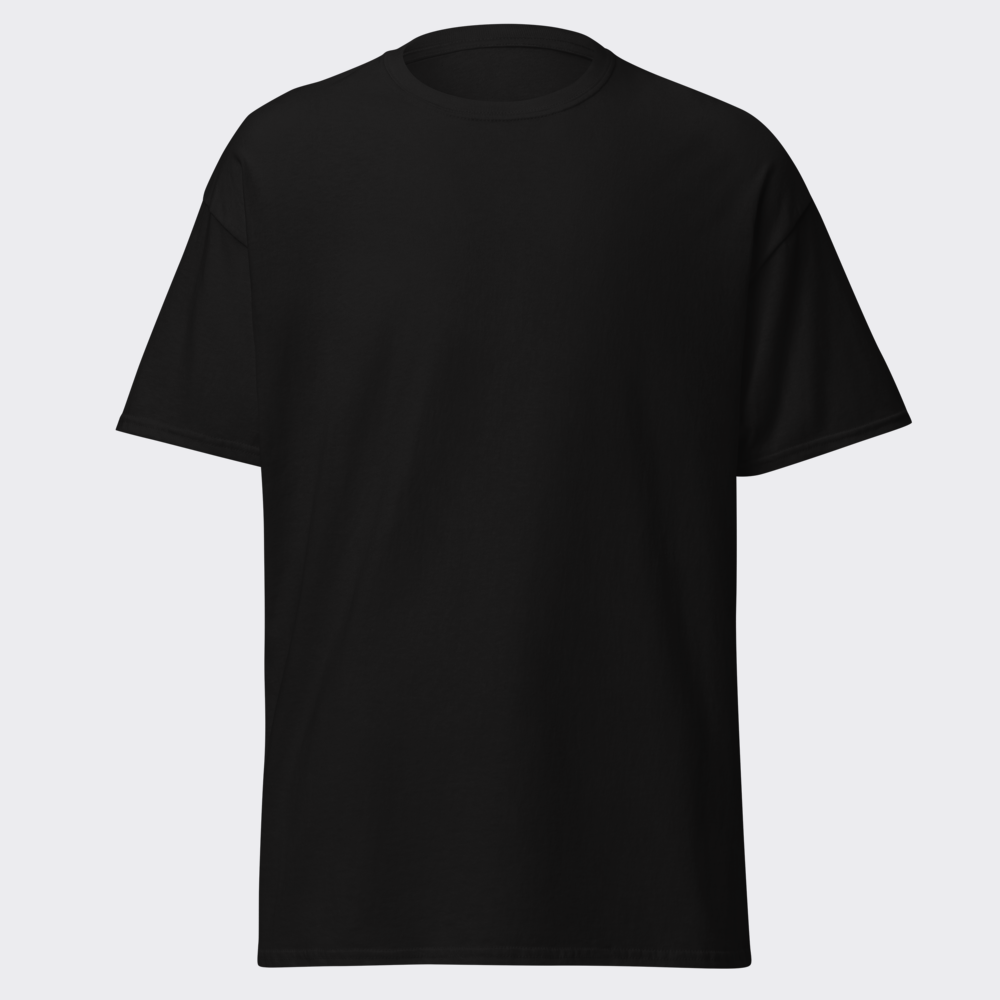
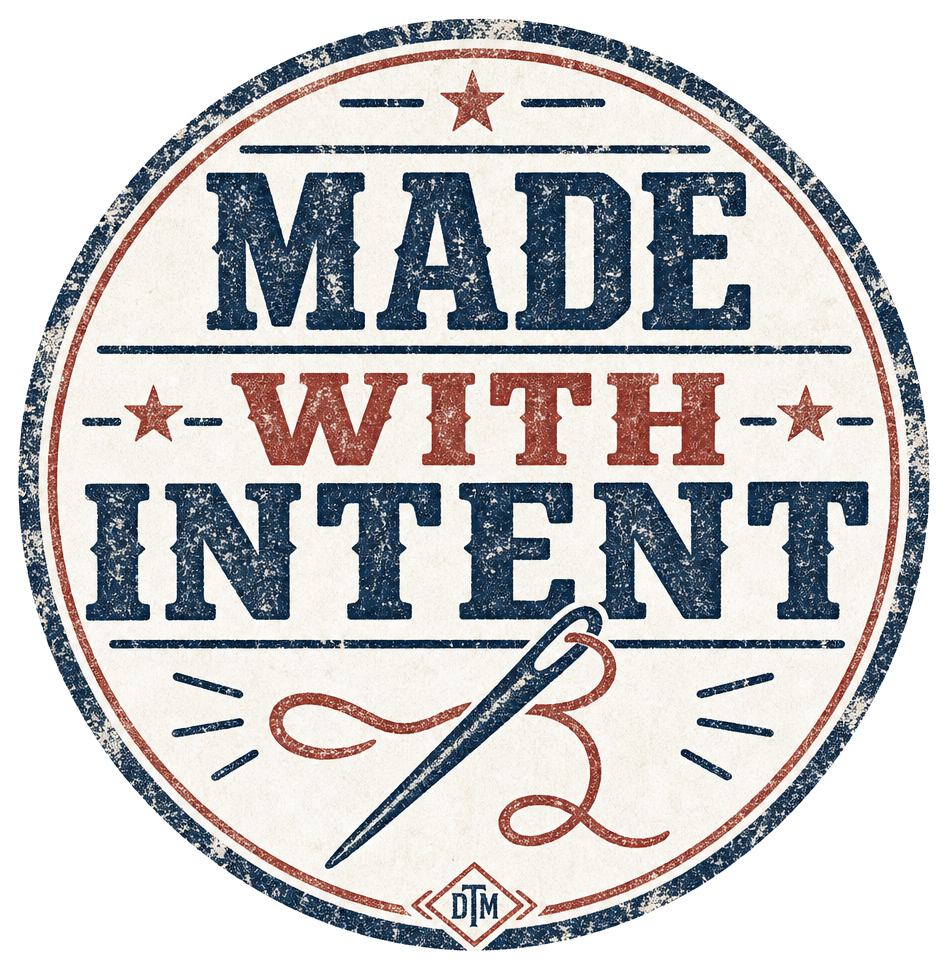
Preview · your design on a Black shirt — the real blank
Ships in 5–9 days · Pay-in-4 available for eligible US orders at checkout
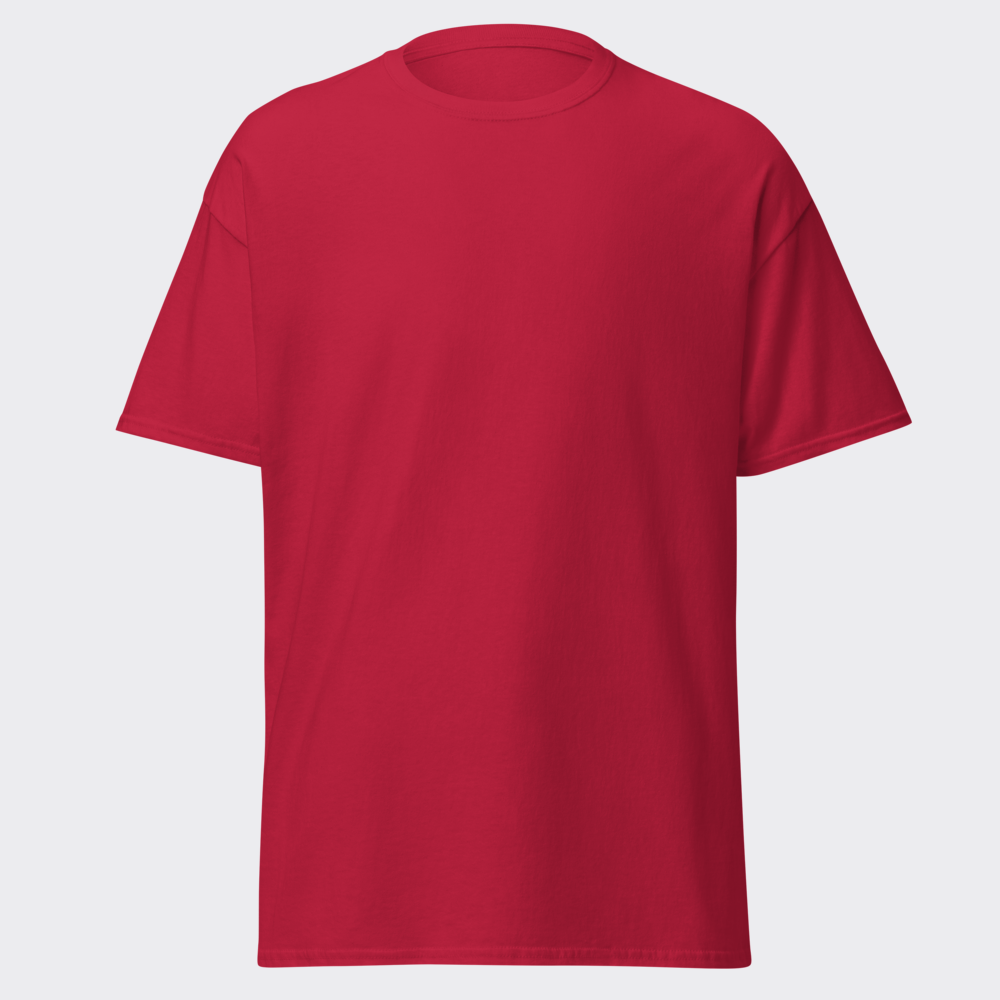

Design it right now
Classic Tee — with YOUR design on it
Upload art, type text, or let the AI design it — live preview, no minimums, from $24.99.
🎨 Put my design on this →
This design, ready to go
Get it on the Classic Tee — $24.99
Opens in the builder with this design placed — buy as-is, tweak the text, or swap the garment.
🛒 Customize & order this →Split eligible US orders into 4 interest-free payments with Shop Pay · No minimums · Ships in 5–9 days
Gildan 5000 · 100% cotton · 5.0–5.3 oz/yd² (170-180 g/m²) · blank sourced from Honduras · printed in the USA network · ships 5–9 days
The fashion industry produces roughly 100 billion garments a year — and an estimated 30% never sell. They get landfilled, shredded, or burned. Every one of those garments used real water, real cotton, real labor, and real shipping fuel to end up as ash. Made-to-order flips that model at the root: nothing is produced until a real person orders it.
How fast fashion actually works
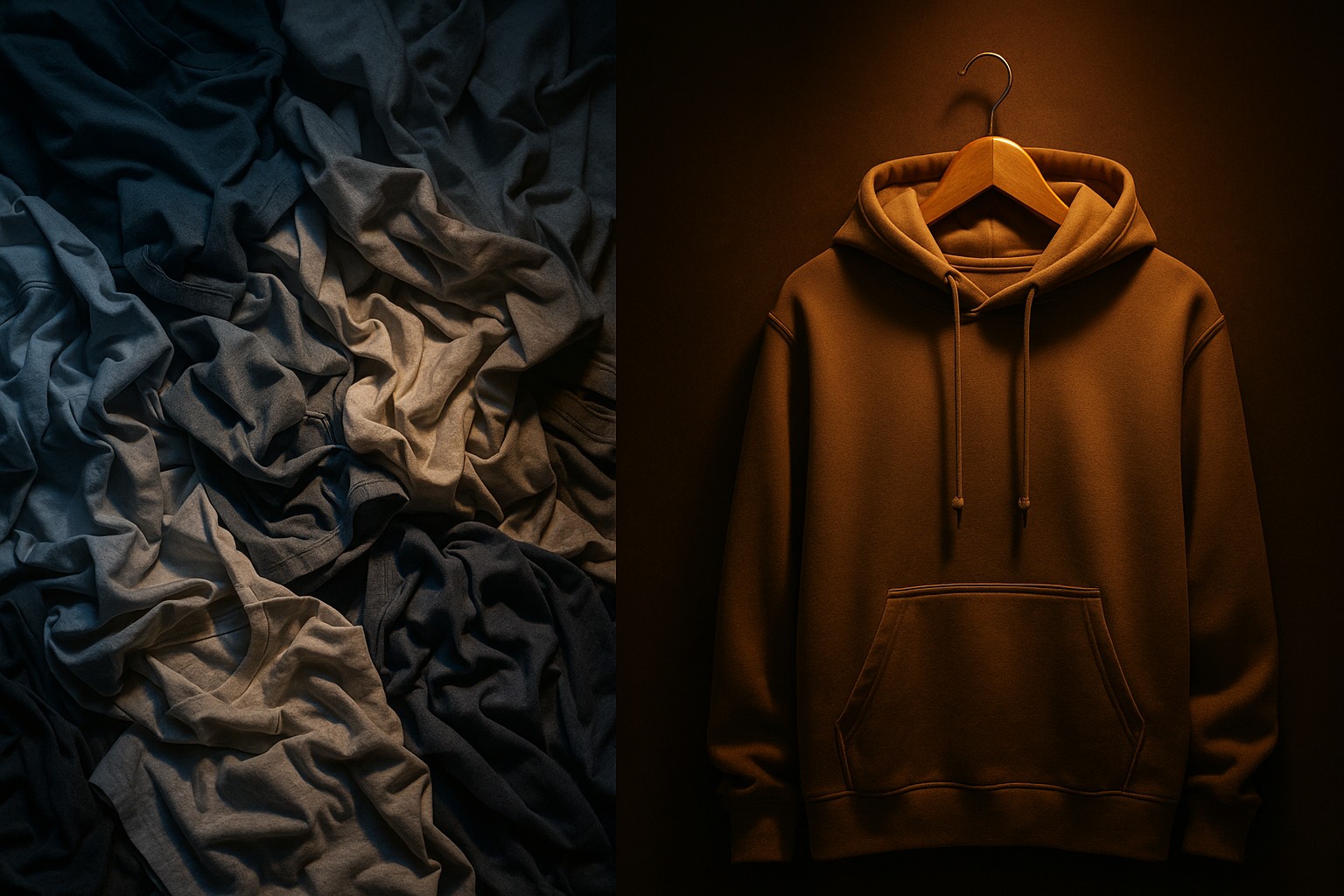
Fast fashion's business model is volume guessing. Brands forecast demand months ahead, manufacture overseas at massive scale, ship inventory across the planet, and mark down or destroy whatever the forecast got wrong. The "$8 tee" is only possible because the unsold ones are pre-priced into it — and because the cost of the waste lands on landfills, not the label.
How made-to-order works
A made-to-order shirt doesn't exist until you click buy. The blank is already milled, but the print run is exactly one: your size, your color, your design. Production starts within days of the order and ships straight to you. There is no warehouse of guesses, no markdown rack, no incinerator at the end of the season.
- Zero overproduction — the unsold-inventory rate of a made-to-order drop is 0%, by definition.
- Every size always exists — S through 5XL aren't a gamble on a size curve, they're printed on demand.
- Designs can be bold — when there's no inventory risk, a brand can release art it loves instead of art a forecast committee approved.
"But isn't shipping one shirt worse?"
Fair question. A single direct-to-door parcel does ship individually — but it replaces a chain that moved the same shirt by container ship, regional warehouse, truck, retail store, and (statistically 30% of the time) back out as waste. Per worn garment, made-to-order comes out ahead, because the denominator that matters is shirts people actually keep and wear.
The honest trade-offs
Made-to-order costs more per unit — a quality printed tee runs $17–29 instead of $8 — and takes 5–9 days instead of two-day shipping. That's the real price of not pre-manufacturing 10,000 guesses. If you need a disposable shirt tonight, fast fashion still wins. If you want a shirt you'll wear for three years, made for you, the math and the ethics both point the same way.
What this looks like in practice
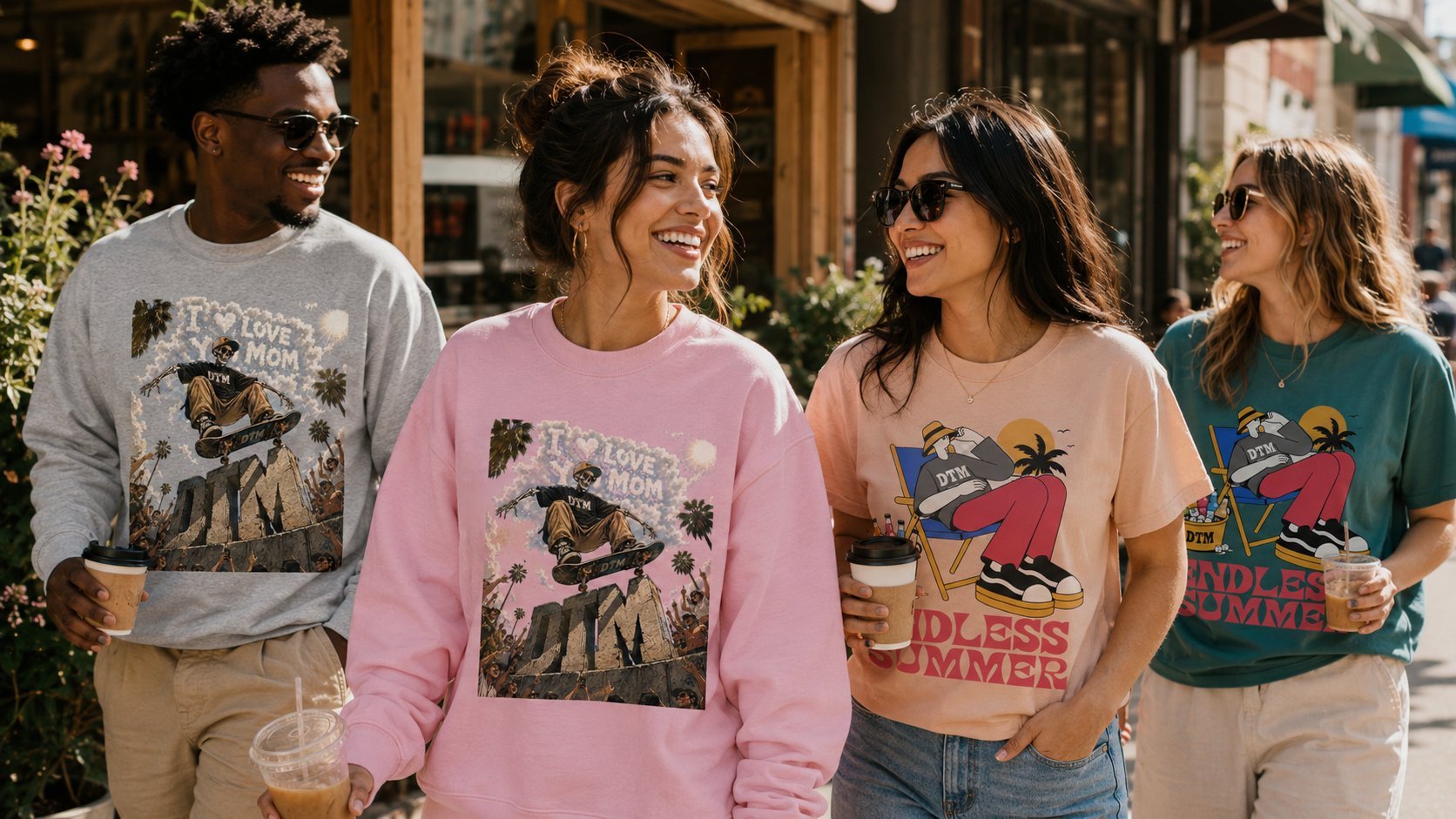
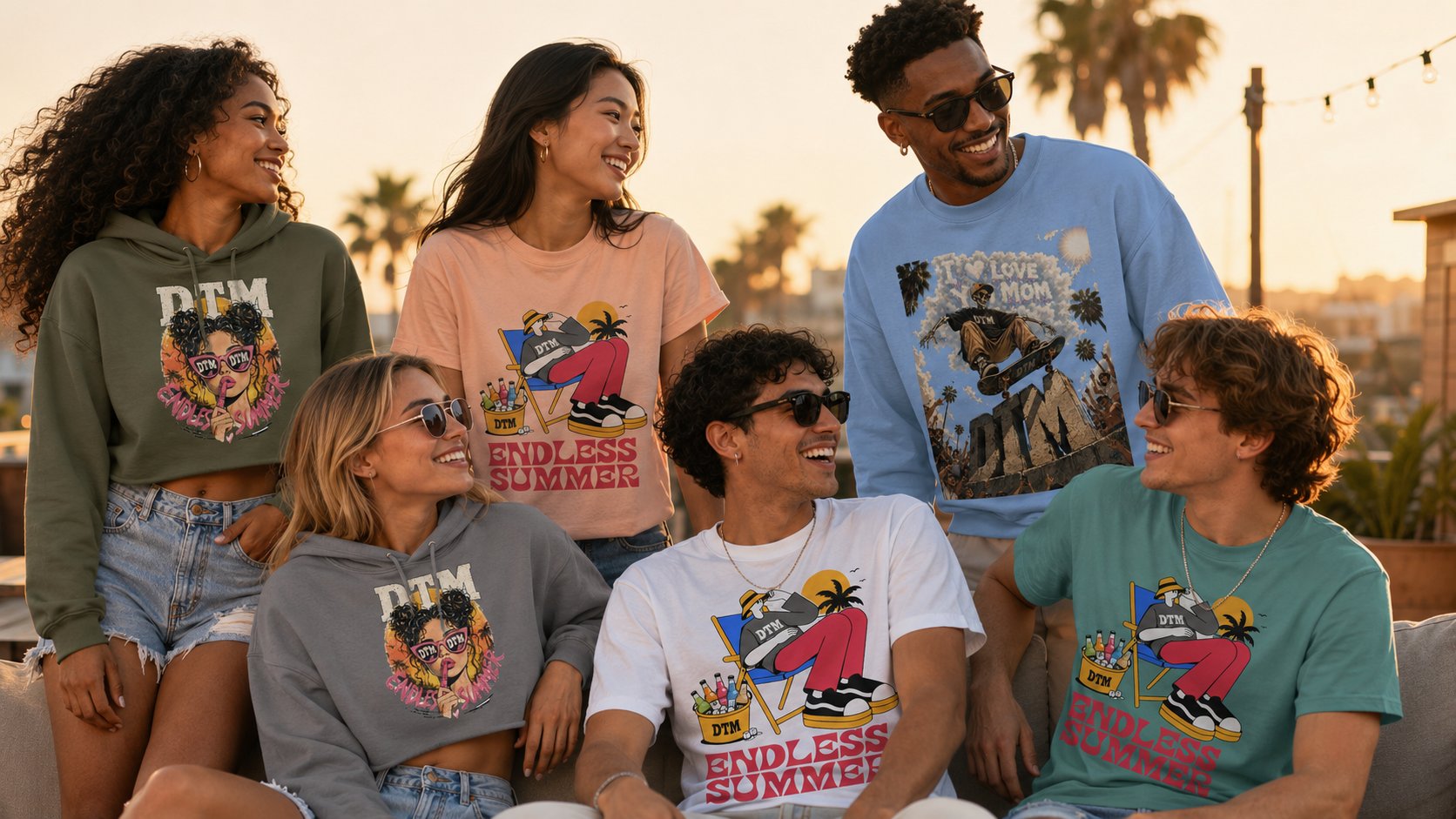
Our Endless Summer Drop is five original designs across 21 garments — and the total inventory sitting in a warehouse right now is zero. Every piece in the collection is printed when it's ordered, in the size that was ordered. The same model powers the free design studio: design your own, and exactly one gets made.
Fast fashion asks "how many can we sell?" Made-to-order asks "who actually wants this?" — and only makes those. Your next tee should be one somebody meant to make.
Frequently asked questions
Why is made-to-order better than fast fashion?
Nothing is produced until somebody actually orders it — zero unsold inventory, zero landfill runs, and the piece you get was made specifically for you.
Does made-to-order take longer to arrive?
Yes — 5–9 days instead of two-day shipping. That's the honest trade for a garment that didn't exist until you asked for it.
Is the quality worse than store-bought?
No — the blanks are the same branded garments stores sell: Gildan heavyweights, Comfort Colors garment-dyed cotton, Champion and Adidas in the premium tier.
Why is fast fashion considered bad for the environment?
The industry produces over 100 billion garments a year and generates roughly 92 million tonnes of textile waste, much of it clothing that was never even sold. Synthetic fibers made from crude oil shed microplastics in every wash, and the average fast fashion piece is worn only around seven times before being discarded. The core problem is overproduction: making clothes speculatively at massive scale guarantees enormous waste before a single customer decides anything.
Does print-on-demand actually reduce clothing waste?
It attacks the biggest source of waste directly: nothing is produced until someone has already bought it, so there are no unsold racks headed to landfill and no warehouse overstock to liquidate. It is not a perfect system, since garments still need responsible sourcing and care, but eliminating speculative overproduction is the single largest structural improvement a clothing model can make. Every DreamToMerch piece is printed in the USA only after the order exists.
How many times is the average fast fashion item actually worn?
Studies of global consumption estimate most fast fashion garments are worn about seven times before being thrown out. That happens because pieces are designed around fleeting micro-trends and built from thin materials that lose shape quickly, so abandoning them feels natural. A heavyweight garment carrying a design you chose yourself inverts both problems: it physically lasts, and it stays meaningful to you after the trend cycle moves on.
What does slow fashion actually mean?
Slow fashion is the deliberate opposite of trend-churn: buying fewer pieces, choosing durable materials and timeless designs, and keeping garments in use for years instead of weeks. It emphasizes intentional purchases, transparent production, and cost-per-wear thinking over sticker price. Made-to-order custom clothing fits the philosophy naturally, since a piece you designed for yourself is bought on purpose, not on impulse.
Why does made-to-order clothing cost more than fast fashion?
Fast fashion prices depend on producing millions of identical units in low-wage supply chains and accepting that a huge share will be discounted or destroyed. Made-to-order flips that: each garment is printed individually on a quality blank, so there is no economy of scale to hide behind, but also no waste baked into the price. Judged by cost-per-wear, a $24.99 heavyweight cotton tee that survives years of washing routinely beats a $10 shirt that quits after a season.
How do I make my clothes last as long as possible?
Buy heavier fabrics to begin with, then wash cold, turn printed pieces inside-out, and skip the high-heat dryer in favor of low tumble or hang drying. Heat and friction are what kill garments, so those two habits alone add years to a tee. Structural details matter too: taped shoulders and double-needle hems are the difference between a shirt that holds its shape and one that twists after ten washes.
Design it right now
Classic Tee — with YOUR design on it
Upload art, type text, or let the AI design it — live preview, no minimums, from $24.99.
🎨 Put my design on this →This design, ready to go
Get it on the Classic Tee — $24.99
Opens in the builder with this design placed — buy as-is, tweak the text, or swap the garment.
🛒 Customize & order this →Split eligible US orders into 4 interest-free payments with Shop Pay · No minimums · Ships in 5–9 days
Or start with the art: free AI design tool + all free tools →