 Your design here
Design it right now
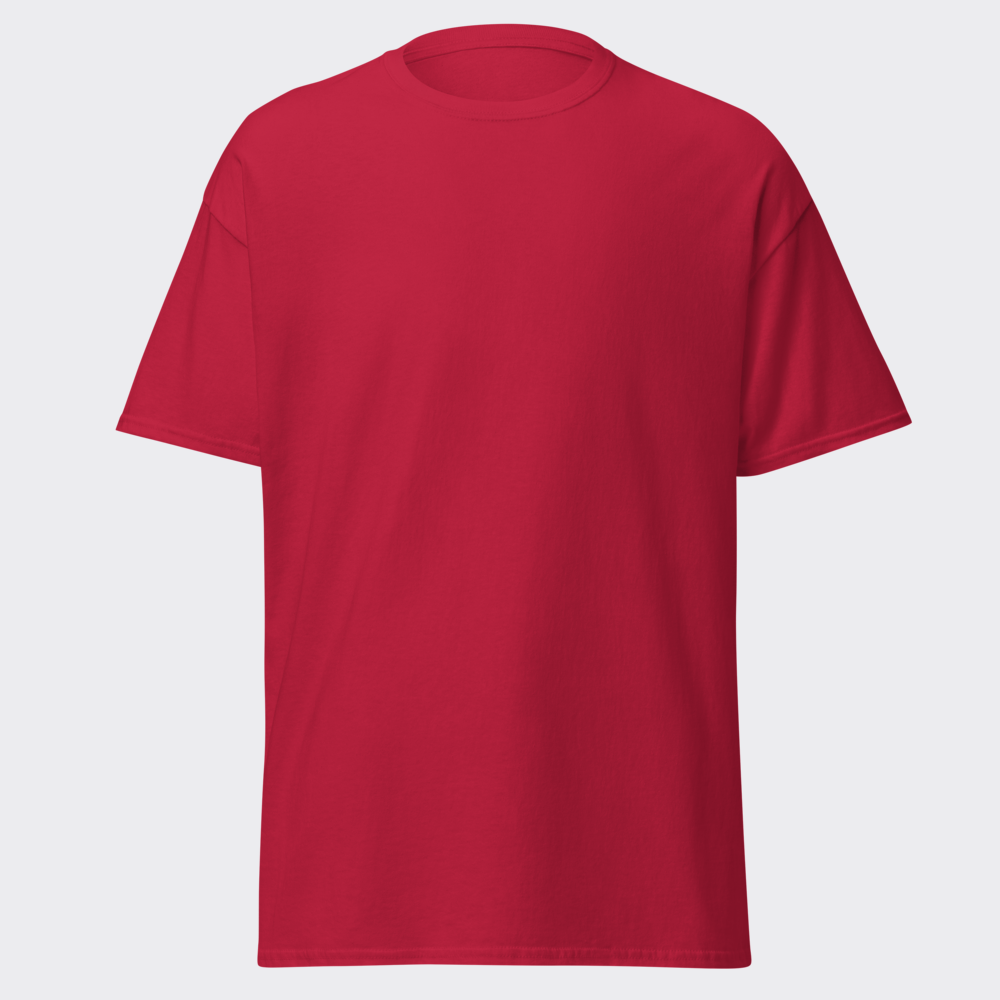
Classic Tee — with YOUR design on it
Upload art, type text, or let the AI design it — live preview, no minimums, pay over time, ships in 5–9 days.
Split eligible US orders into 4 interest-free payments with Shop Pay
🎨 Put my design on this →Gildan 5000 · 100% cotton · 5.0–5.3 oz/yd² (170-180 g/m²) · blank sourced from Honduras · printed in the USA network · ships 5–9 days
Government contractor uniforms are usually bought through an RFQ, a Request for Quotation. Agencies, military units and the prime contractors who work for them send out a list of garments, colors, decoration and sizes, and ask suppliers for prices. A small apparel supplier can answer one well if the quote covers what the buyer actually checks: a clear price on every line, an honest lead time, the country of origin of each garment, how tariffs are handled, and how long the price holds. This is how we put a federal RFQ quote together as a veteran-owned small business in Flint, Michigan. Our government ordering page is here: government and agency apparel orders.
What a federal RFQ is
Most uniform and apparel buys fall under simplified acquisition, the faster set of rules for smaller purchases. Under those rules a quotation is information, and the government places an order based on it. That is why the details in your quote matter so much: the order that comes back will reference what you wrote.
RFQs show up in a few places. Larger ones are posted on SAM.gov Contract Opportunities. Agencies that buy through GSA Schedules send RFQs to Schedule holders through GSA eBuy. Many smaller ones arrive by email from a contracting officer, a unit supply office, or a prime contractor who needs uniforms for its own staff on a federal job. You need an active SAM.gov registration to be paid on a federal award, so finish that before you chase bids.
GSA contractor uniforms vs open-market buys
"GSA contractor" gets used two ways. Some buyers mean companies that hold a GSA Multiple Award Schedule and sell through GSA Advantage. Others mean any contractor working for the government who needs uniforms for its crew. Plenty of apparel buys are open-market, meaning any registered small business can quote. Read the RFQ for which kind it is before you spend time on it.
Building the government contractor uniform quote line by line
Match the RFQ's line items (often called CLINs) exactly, in the same order, with the same item numbers. For each line, state:
- The exact garment: brand, style number, color name and fabric
- The decoration: embroidery or print, placement, size in inches and thread or ink colors
- The size range and any price difference for 2XL and up, written on the line
- Unit price, quantity and extended price
- Shipping terms: FOB destination means you pay the freight and carry the risk until it arrives, which is what most RFQs expect
If the RFQ lists a garment you cannot supply, offer the closest equivalent you can, name it plainly, and give two options where you can. Then let the buyer choose. Do not quietly swap a style.
Lead time: quote the real number
State lead time in calendar days after receipt of order (ARO), and build it from the actual steps: proof approval, production, transit, and a buffer for one reprint. On our standard made-to-order line, production and shipping run about 5 to 9 business days once a proof is approved. Specialty items, US-made blanks and very large runs take longer. Quote the number you can hit on a bad week. A missed delivery date on a first federal order costs more than the margin on the order.
Country of origin on every line
For apparel, country of origin follows where the garment was made. Printing or embroidering a garment in the United States does not make it a US-made garment. A shirt sewn in Honduras and decorated in Ohio is a product of Honduras. We state the blank's country of origin on every quote line, and we make no domestic-content claim unless the manufacturer has confirmed it in writing for that exact style.
This matters because of three rules a buyer may be working under:
- The Buy American Act applies to many civilian agency supply purchases above the micro-purchase threshold and favors domestic products.
- The Berry Amendment applies to Defense Department purchases of clothing and textiles above the simplified acquisition threshold and requires them to be fully domestic, down to the fiber.
- The Trade Agreements Act applies on GSA Schedules and larger buys and limits products to the US and designated countries.
If an RFQ requires domestic products, quote a documented US-made blank as its own line or option, priced separately. US-made garments cost more and come in fewer styles, so say that clearly.
Tariffs and quote validity
Most apparel blanks are imported, and blank prices move when tariffs change. Your quote should say that prices include all duties and tariffs in effect on the quote date, and it should state how long the price holds. If the RFQ names a validity period, such as 60 days, match it. If it is silent, 30 days is a reasonable default for apparel. A long validity window on imported goods is where a small supplier loses money: the award arrives, the blank price has gone up, and the quote is still binding on your end.
Samples, proofs and the approval step
Some RFQs ask for a sample or a product sheet before award. A digital proof with measurements, thread colors and placements answers most questions. If the buyer wants a physical sample, quote it at the normal one-piece price and include its lead time. Nothing should go into production until the proof is approved in writing.
How government apparel orders get paid
Small buys under the micro-purchase threshold are often paid with a government purchase card, which works like a business card payment. As of October 1, 2025 the standard federal micro-purchase threshold is $15,000, and individual cardholders may have lower limits. Splitting one requirement into smaller orders to stay under a card limit is prohibited, so never structure a quote that way.
Larger awards are invoiced after delivery and acceptance, and federal agencies generally pay within 30 days of a proper invoice. That means the supplier pays for production weeks before the government pays the supplier. Plan the cash for that gap before you submit.
A checklist before you submit
- Every CLIN answered, in order, with style numbers
- Size upcharges written on the line
- Lead time in calendar days ARO
- Country of origin for every garment
- Tariff and duty language
- Quote validity matching the RFQ
- UEI, business size and veteran-owned status in the header, stated accurately
- One point of contact with a phone number that gets answered
Related reading
For the garments themselves, see embroidered polos for small business and embroidery vs print on work gear. For planning a uniform budget across a year, see company uniform budget planning.
Send us the RFQ
If you are a contracting officer, a unit supply office or a prime contractor with uniforms to source, send the RFQ or the item list. We answer with what we can supply line by line, the country of origin of each garment, and a lead time we can hold.
See the merch in real life
Real garments, printed and embroidered to order.
Frequently asked questions
What is an RFQ for government uniforms?
A Request for Quotation. The buyer lists the garments, decoration and sizes and asks suppliers for prices. Under simplified acquisition the government places an order based on the quote.
Does printing a shirt in the US make it US-made?
No. Country of origin follows where the garment was made. A shirt sewn abroad and decorated in the US is still a product of the country where it was sewn.
What should a federal apparel quote include?
Every line item in order, the exact garment and decoration, size upcharges, unit and extended prices, FOB destination shipping, lead time in days after order, country of origin, tariff language and quote validity.
How long should a quote stay valid?
Match the period in the RFQ. If it is silent, 30 days is a reasonable default for apparel because imported blank prices can change with tariffs.
What is the federal micro-purchase threshold?
As of October 1, 2025 the standard threshold is $15,000. Individual cardholders may have lower limits, and splitting one requirement to stay under a limit is prohibited.
When does the government pay for a larger order?
After delivery and acceptance. Agencies generally pay within 30 days of a proper invoice, so the supplier funds production first.
Pay-in-4 may be available for eligible US orders at checkout.
Or start with the art: free AI design tool + all free tools →