 Your design here
Design it right now
Classic Tee — with YOUR design on it
Upload art, type text, or let the AI design it — live preview, no minimums, pay over time, ships in 5–9 days.
Split eligible US orders into 4 interest-free payments with Shop Pay
🎨 Put my design on this →Gildan 5000 · 100% cotton · 5.0–5.3 oz/yd² (170-180 g/m²) · blank sourced from Honduras · printed in the USA network · ships 5–9 days
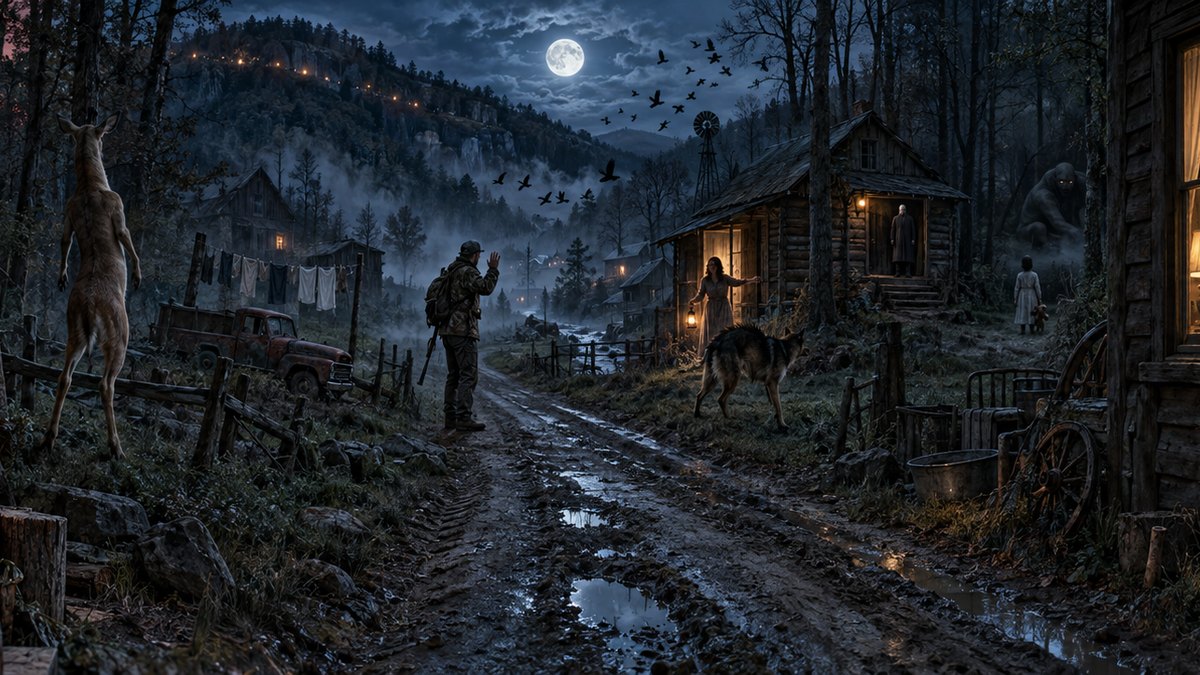
This video is folklore-style storytelling, not a list of documented historical rules followed by everyone in Appalachia. The ten warnings borrow the rhythm of campfire stories, modern folk horror, and the old idea that mountains become stranger when darkness falls. They should be enjoyed as stories, not presented as facts about Appalachian people.
What the video covers
Voices and whistles make the woods feel occupied
The first rules say to ignore your name when it comes from the trees and never whistle after dark. We are not claiming either rule is a universal Appalachian tradition. The Smithsonian Center for Folklife and Cultural Heritage describes Appalachian storytelling as a living mixture of family tales, local legends, religion, place, and inherited knowledge. A familiar voice coming from an unseen source is simply a powerful horror motif inside that landscape.
The animal rules turn recognition against you
The upright deer and unexplained ridge lights work because they begin with something ordinary. Deer belong in the mountains. Lights belong near roads or hunters. The fear starts when one detail stops fitting. Smithsonian Folklife writing about Appalachian supernatural stories notes how local landscapes and recognizable creatures can become containers for community legends. These exact deer and light rules, however, should be treated as creative folklore-style material rather than authenticated old beliefs.
Silence and dogs become warning systems
The video says to notice when the forest goes silent and to trust a dog that refuses to follow a familiar voice. Those ideas turn everyday observations into supernatural rules. The Library of Congress's Appalachian storytelling collections include ghost tales, witch stories, family narratives, and oral traditions gathered from actual communities. They demonstrate the region's rich storytelling culture, but they do not establish this specific 60-second silence rule as a traditional Appalachian practice.
Doors and crying children use the oldest kind of fear
A dead person knocking and a child crying alone in the woods both force the listener to choose between compassion and caution. That tension appears across folklore far beyond Appalachia. The Smithsonian's oral-history guidance explains that genuine folklore is tied to identifiable tradition bearers, families, and communities. Without that chain of transmission, a modern scary rule should not be labeled ancient simply because someone puts a mountain accent around it.
The final rules make home feel less safe
Closing curtains and avoiding a nameless stranger move the danger from deep wilderness toward the front door. That is deliberate folk-horror structure. Each rule narrows the distance between the listener and whatever might be outside. The final line about rules written by “the ones who came back” is part of the video's storytelling voice, not a quotation from Appalachian elders or an archived historical source.
Where this story comes from
The Wikipedia article “Appalachian culture” provides broad regional context, but it does not contain this ten-rule list. There is no primary source for these exact rules because they are presented here as folklore-style creative storytelling, not as a recovered Appalachian rulebook. For genuine primary folklore material, the Library of Congress's Blue Ridge Parkway Folklife Project preserves recorded stories and interviews collected from Appalachian tradition bearers in the late 1970s.
Why a shirt company tells this story
Mountain folklore belongs to storytellers, hikers, horror readers, Appalachian families, artists, campers, and people who love the feeling of an old warning told beside a fire. A design might use a dark ridge, a deer silhouette, a porch curtain, a dog staring into the trees, or one unexplained light. It can be printed or embroidered on one shirt with no minimum. Fiction and folklore-inspired art can be fun to wear as long as we are clear about what is traditional, what is modern, and what we invented for the story.
Watch it on YouTube: 10 Wild Stories From The Appalachian Mountains. Subscribe to GoatNut for the next one.
Frequently asked questions
Are these ten Appalachian rules real folklore?
Not as one documented historical list. The video uses modern folklore-style horror inspired by Appalachian landscapes and storytelling. Individual motifs may resemble wider folk beliefs, but the ten rules should not be presented as universal traditions.
Is Appalachian folklore really full of supernatural stories?
Appalachian oral traditions do include ghost stories, folk magic, local legends, religious beliefs, Jack Tales, family stories, and supernatural material. The region is diverse, so no single set of beliefs represents all Appalachian communities.
Where can real Appalachian folklore be researched?
The Library of Congress American Folklife Center and Smithsonian Folklife collections preserve interviews, recordings, stories, music, and fieldwork from Appalachian communities. Those archives are stronger sources than unattributed social media rule lists.
Or start with the art: free AI design tool + all free tools →