 Your design here
Design it right now
Classic Tee — with YOUR design on it
Upload art, type text, or let the AI design it — live preview, no minimums, pay over time, ships in 5–9 days.
Split eligible US orders into 4 interest-free payments with Shop Pay
🎨 Put my design on this →Gildan 5000 · 100% cotton · 5.0–5.3 oz/yd² (170-180 g/m²) · blank sourced from Honduras · printed in the USA network · ships 5–9 days
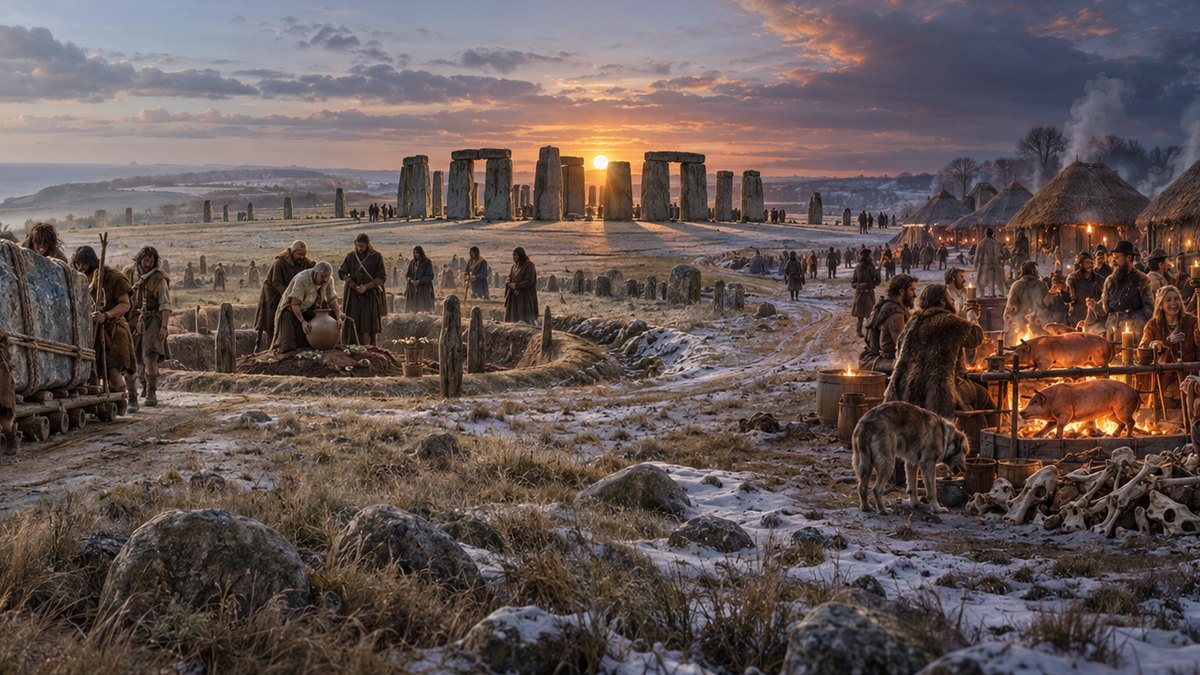
Stonehenge looks like one monument built for one purpose. Archaeology tells a messier story. The place changed over generations, and the people around it buried the dead, moved stone across Britain, gathered for feasts, and kept reshaping the landscape.
The five things
Stonehenge was built in stages
English Heritage dates the earliest major phase to around 3000 BC, when a circular ditch and bank were created. The famous large sarsen stones came much later, around 2500 BC. That gap matters. Stonehenge was not a single construction project. Generations inherited the site, changed it, moved stones, and gave the same place new meanings over many centuries.
The Welsh connection is written in the stone
Geologists have traced many of the smaller bluestones to outcrops in west Wales. University College London researchers have linked particular stone types to the Preseli region. Moving them to Salisbury Plain required a journey of well over one hundred miles. Whether people carried them entirely overland, used waterways, or combined methods remains debated, but the geological match is strong.
The monument began with the dead close by
English Heritage describes Stonehenge as one of the largest known Late Neolithic cremation cemeteries in Britain. Cremated human remains were placed in and around holes inside the early monument. That changes the mood of the site. Before the giant stone circle became the image everyone knows, Stonehenge already had a strong connection to ancestry, burial, and remembrance.
The nearby feasts were enormous
English Heritage reports more than 38,000 animal bones from Durrington Walls, the large settlement near Stonehenge. About 90 percent of identified bones were from pigs. Many animals appear to have been slaughtered around midwinter, and isotope studies suggest some were brought from far away. The builders’ world included travel, cooking, ceremony, and crowds, not just silent stone hauling.
A private buyer gave it away
English Heritage records that Stonehenge was sold at auction on September 21, 1915, for £6,600 to Cecil Chubb. He bought the monument while the surrounding estate was being broken into lots. Three years later, Chubb and his wife gave Stonehenge to the nation, with conditions intended to protect public access and preserve the site for the future.
Where this story comes from
The overview is covered in the Wikipedia article “Stonehenge.” A striking primary source is the 1915 Knight, Frank & Rutley auction catalog that listed Stonehenge as Lot 15. Archaeology adds much older evidence through human remains, animal bones, tools, and the stones themselves, but the auction catalog captures the strange modern moment when the monument had a price.
Why a shirt company tells this story
Stonehenge belongs to archaeology fans, travelers, teachers, solstice watchers, geology nerds, and people who simply like ancient places that still refuse to explain themselves completely. A design might use the stone silhouette, a bluestone route, or a simple sunrise alignment. It can be printed or embroidered on one shirt with no minimum. The best part is that the design can celebrate the mystery without pretending we know more than the evidence allows.
Watch it on YouTube: 5 Things Nobody Tells You About Stonehenge. Subscribe to GoatNut for the next one.
Frequently asked questions
How old is Stonehenge?
The site developed in stages. The earliest major earthwork dates to around 3000 BC, while the best-known large stone setting was built roughly five hundred years later, around 2500 BC.
Where did the Stonehenge stones come from?
The large sarsen stones came from relatively nearby in southern England. Many smaller bluestones have been geologically traced to west Wales, more than one hundred miles from Stonehenge.
Who bought Stonehenge in 1915?
Cecil Chubb bought Stonehenge at auction in 1915 for £6,600. In 1918, he and his wife gave the monument to the British nation for future protection.
Or start with the art: free AI design tool + all free tools →