 Your design here
Design it right now
Classic Tee — with YOUR design on it
Upload art, type text, or let the AI design it — live preview, no minimums, pay over time, ships in 5–9 days.
Split eligible US orders into 4 interest-free payments with Shop Pay
🎨 Put my design on this →Gildan 5000 · 100% cotton · 5.0–5.3 oz/yd² (170-180 g/m²) · blank sourced from Honduras · printed in the USA network · ships 5–9 days
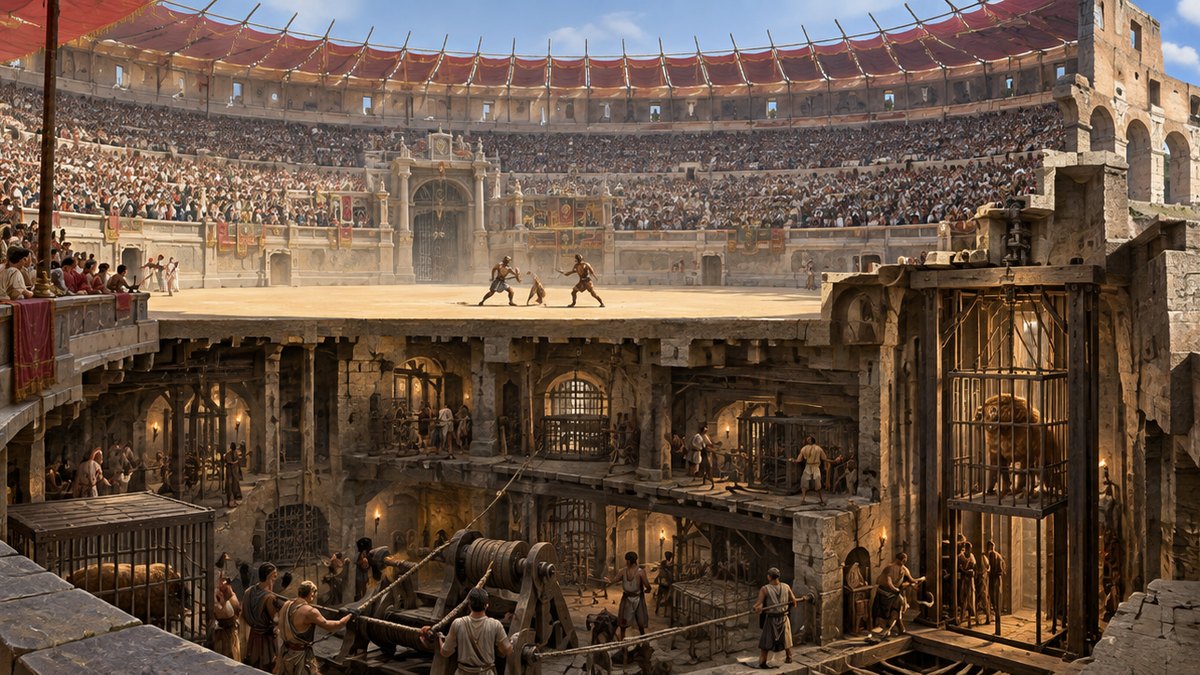
The Colosseum looks open to the sky today, but ancient spectators did not simply bake in the Roman sun. The building was a machine as much as an arena, with shade systems, hidden corridors, lifts, ticketing, and a long second life as a source of building material.
The five things
It had a giant fabric shade system
The Archaeological Park of the Colosseum describes the velarium, a vast awning system stretched above much of the seating. Masts, ropes, and fabric had to be managed around the upper rim of the amphitheater. The Park identifies the sailors of the Misenum fleet with operating the rigging, which makes sense for a job built around ropes, tension, wind, and large sheets of fabric.
The basement was a second building
The visible underground structure is the hypogeum, created after the earliest phase of the arena. The Archaeological Park explains that corridors, service spaces, machinery, and vertical lifts supported performances above. Animals, scenery, and people could be moved toward trapdoors in the arena floor, allowing organizers to create sudden appearances that spectators could not see being prepared below.
Water spectacles happened before the permanent hypogeum
The Archaeological Park says the earliest underground structures were wooden and that water spectacles were held around the time of the amphitheater’s inauguration. Once Domitian replaced the early arrangement with permanent masonry underground levels, major flooding of the arena became impractical. Ancient writers including Cassius Dio also describe spectacular water displays connected with the Flavian period.
Admission was organized by numbered seating
Roman spectacles at the Colosseum were generally sponsored for the public rather than sold like modern sporting events. Archaeologists have found numbered entrance systems built directly into the architecture, and seating was strictly divided by social rank. Surviving tesserae from Roman entertainment culture show how small tokens could direct spectators to assigned sections, while numbered arches helped enormous crowds enter and leave efficiently.
Rome reused the monument as a quarry
The Archaeological Park says the Colosseum became a quarry for building materials during the Middle Ages and Renaissance, with part of its fabric reused in the construction of St. Peter’s Basilica. Earthquakes, neglect, and deliberate removal of travertine, marble, and metal changed the structure for centuries. The ruin tourists see today is therefore also a record of later Rome recycling ancient Rome.
Where this story comes from
The broad history appears in the Wikipedia article “Colosseum.” A major primary source is Cassius Dio’s Roman History, which describes spectacles held under the Flavian emperors, including displays associated with the amphitheater’s opening. Other ancient writers, inscriptions, surviving architecture, and archaeological excavation help reconstruct features that no single Roman author explained completely.
Why a shirt company tells this story
The Colosseum belongs to travelers, classicists, architects, engineers, teachers, sports fans, and people fascinated by how ancient crowds experienced entertainment. A design might use the arches, seating plan, hypogeum, Roman numerals, or the geometry of the velarium rigging. It can be printed or embroidered on one shirt with no minimum. Wearing the subject can be a way to celebrate the building as more than a ruin, and to remember the complicated machine that once worked inside it.
Watch it on YouTube: 5 Things Nobody Tells You About The Colosseum. Subscribe to GoatNut for the next one.
Frequently asked questions
Did the Colosseum really have a roof?
It had a huge retractable awning called the velarium rather than a solid roof. Fabric, ropes, and masts shaded large parts of the seating area, with sailors associated with operating the rigging.
What is underneath the Colosseum floor?
The hypogeum is a network of underground corridors, rooms, machinery, and service spaces. Lifts and trapdoors helped move animals, scenery, and performers from below the arena to the spectacle above.
Did Romans hold naval battles in the Colosseum?
Ancient sources and archaeological evidence indicate water spectacles occurred at the amphitheater in its early period. Later construction of the permanent masonry hypogeum made major flooding of the arena impractical.
Or start with the art: free AI design tool + all free tools →