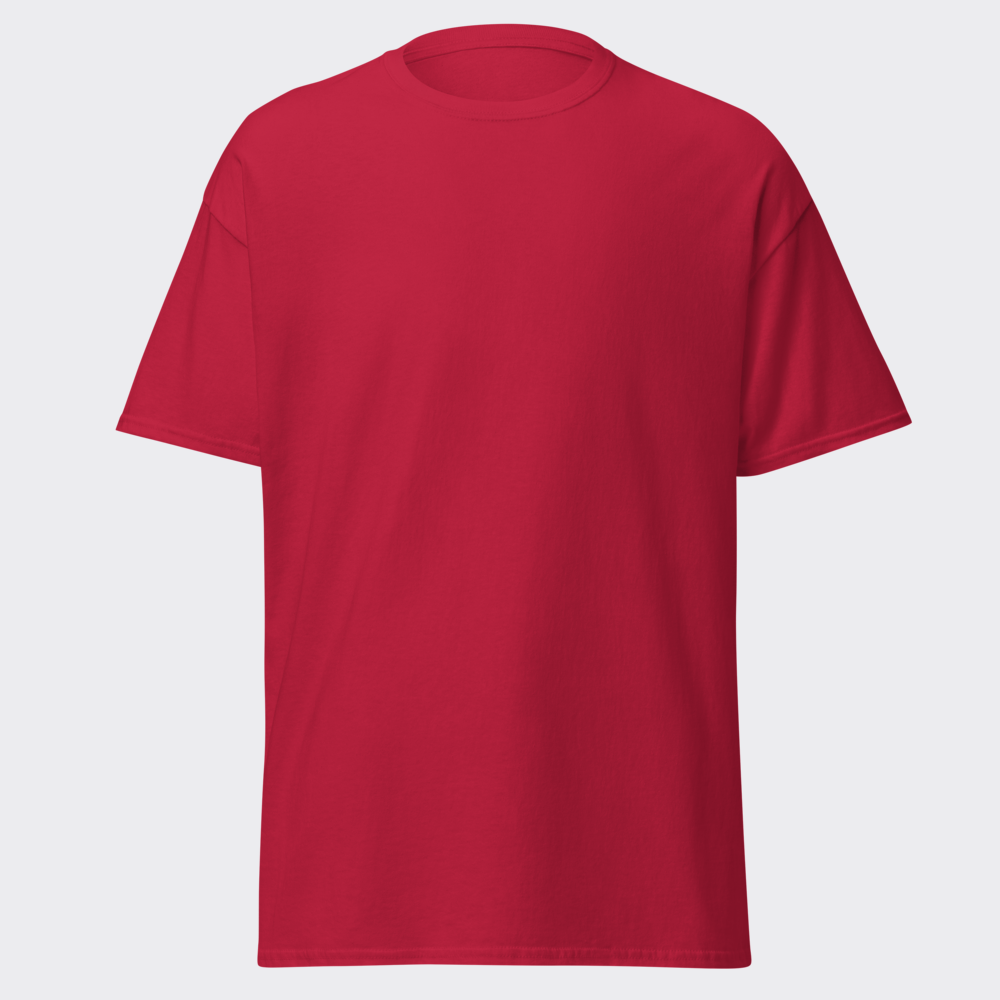
 Your design here
Design it right now
Classic Tee — with YOUR design on it
Upload art, type text, or let the AI design it — live preview, no minimums, pay over time, ships in 5–9 days.
Split eligible US orders into 4 interest-free payments with Shop Pay
🎨 Put my design on this →Gildan 5000 · 100% cotton · 5.0–5.3 oz/yd² (170-180 g/m²) · blank sourced from Honduras · printed in the USA network · ships 5–9 days
The Statue of Liberty feels as if it has always stood in New York Harbor exactly as it does now. In fact, it arrived in boxes, changed color in public view, nearly waited without a pedestal, and even spent years doing a job it was not very good at.
The five things
The green surface is a protective chemical layer
The National Park Service explains that the statue’s outer skin is copper. As copper reacted with air, moisture, and pollution, it developed a patina that gradually shifted the surface toward green. The change was not simple paint fading. The patina became a protective layer over the metal, which is one reason conservation work does not try to polish Liberty back to bright copper.
New York received a giant construction kit
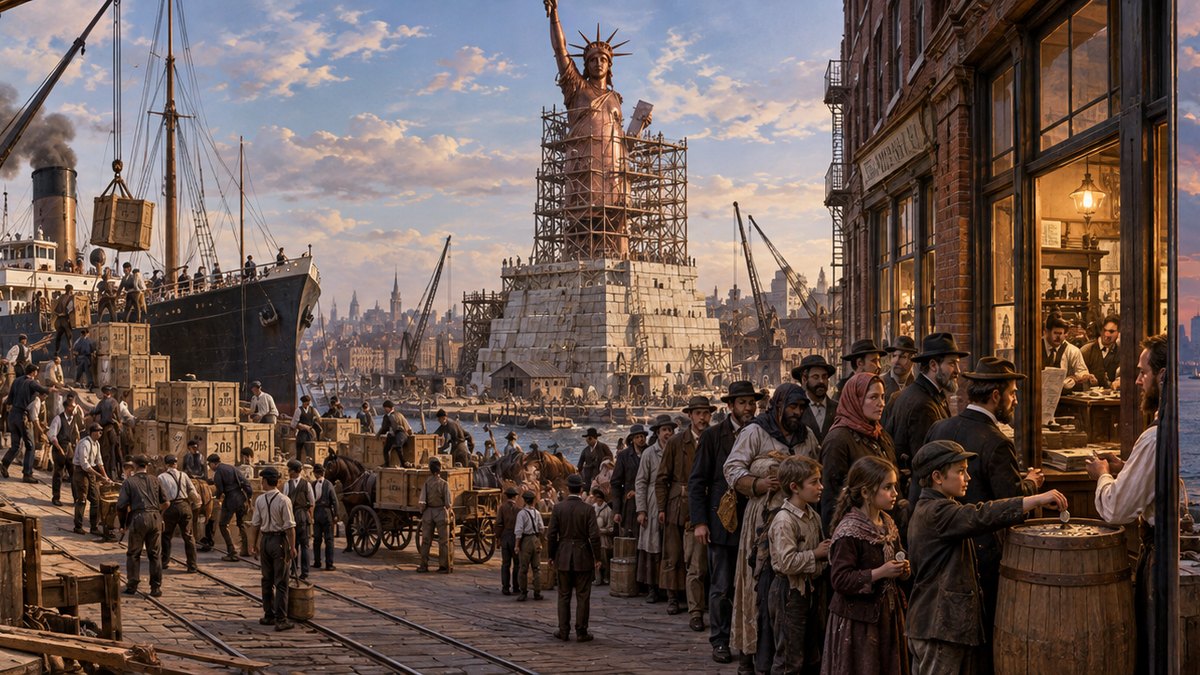
The Statue of Liberty-Ellis Island Foundation records that the completed statue was dismantled in France into 350 pieces and packed into 214 crates. The French ship Isère carried the pieces across the Atlantic in 1885. Workers then had to rebuild the copper skin around an internal iron framework on Bedloe’s Island before the dedication in October 1886.
The face model is still debated
The National Park Service says Liberty’s face is often said to be modeled on Bartholdi’s mother, Charlotte. A deeper Park Service historical study calls that story a legend and notes that Bartholdi never confirmed it. That is a useful warning about famous monuments. A detail can be repeated for generations until it sounds proven, even when the surviving documents remain uncertain.
Small donations rescued the pedestal campaign
The National Park Service describes how newspaper publisher Joseph Pulitzer used the New York World to push the stalled pedestal fund. He promised to print donors’ names, including people who gave very small amounts. The campaign turned the project into a public cause instead of a gift handled only by wealthy patrons. The pedestal became a lesson in mass fundraising before online crowdfunding existed.
Liberty once belonged to the lighthouse system
The National Park Service records that the statue served as a lighthouse from 1886 to 1902. Its electric torch was difficult to make useful for navigation because the light was high, scattered, and not strong enough in the way mariners needed. After the lighthouse role ended, the torch remained a symbol rather than a practical beacon guiding ships through the harbor.
Where this story comes from
The overview is covered in the Wikipedia article “Statue of Liberty.” A vivid primary source is Joseph Pulitzer’s 1885 fundraising campaign in the New York World. Those editorials and donor notices show the pedestal problem happening in real time and reveal how a newspaper turned thousands of small gifts into part of the monument’s construction story.
Why a shirt company tells this story
Liberty means something different to immigrants, New Yorkers, travelers, history teachers, architecture fans, and families whose first view of America came through the harbor. A design can focus on the torch, crown, copper texture, construction pieces, or a simple skyline. It can be printed or embroidered on one shirt with no minimum. The familiar symbol becomes more personal when you know it was assembled, funded, weathered, and changed by ordinary people and time.
Watch it on YouTube: 5 Things Nobody Tells You About The Statue Of Liberty. Subscribe to GoatNut for the next one.
Frequently asked questions
Why is the Statue of Liberty green?
Its outer skin is copper. Over time, chemical reactions with air and moisture created a green patina on the surface. That layer also helps protect the copper underneath from further corrosion.
How did the Statue of Liberty get to America?
It was dismantled in France into 350 pieces, packed into 214 crates, and shipped across the Atlantic aboard the French vessel Isère in 1885 before being reassembled in New York.
Did the Statue of Liberty work as a lighthouse?
Yes. The statue served officially as a lighthouse from 1886 until 1902, but the torch was not an effective navigational light, so the lighthouse role was eventually discontinued.
Or start with the art: free AI design tool + all free tools →