 Your design here
Design it right now
Garment-Dyed Tank — with YOUR design on it
Upload art, type text, or let the AI design it — live preview, no minimums, pay over time, ships in 5–9 days.
Split eligible US orders into 4 interest-free payments with Shop Pay
🎨 Put my design on this →Comfort Colors 9360 · 100% ring-spun cotton · 6.1 oz./yd.² (206.8 g/m²) · blank sourced from Honduras · printed in the USA network · ships 5–9 days
Boston’s Great Molasses Flood sounds like a joke until you see the photographs. On January 15, 1919, a storage tank failed in the North End and turned an ordinary industrial product into a fast-moving wall that crushed buildings, twisted steel, and killed 21 people.
What the video covers
The tank had been warning people for years
The City of Boston says the 50-foot tank held about 2.3 million gallons of molasses and had leaked before the disaster. Historian Stephen Puleo found accounts of neighborhood children collecting the syrup that seeped through its seams. Complaints did not lead to a proper structural fix. The company instead painted the tank a rust-brown color that made leaking molasses harder to see.
The wave moved far faster than people expect
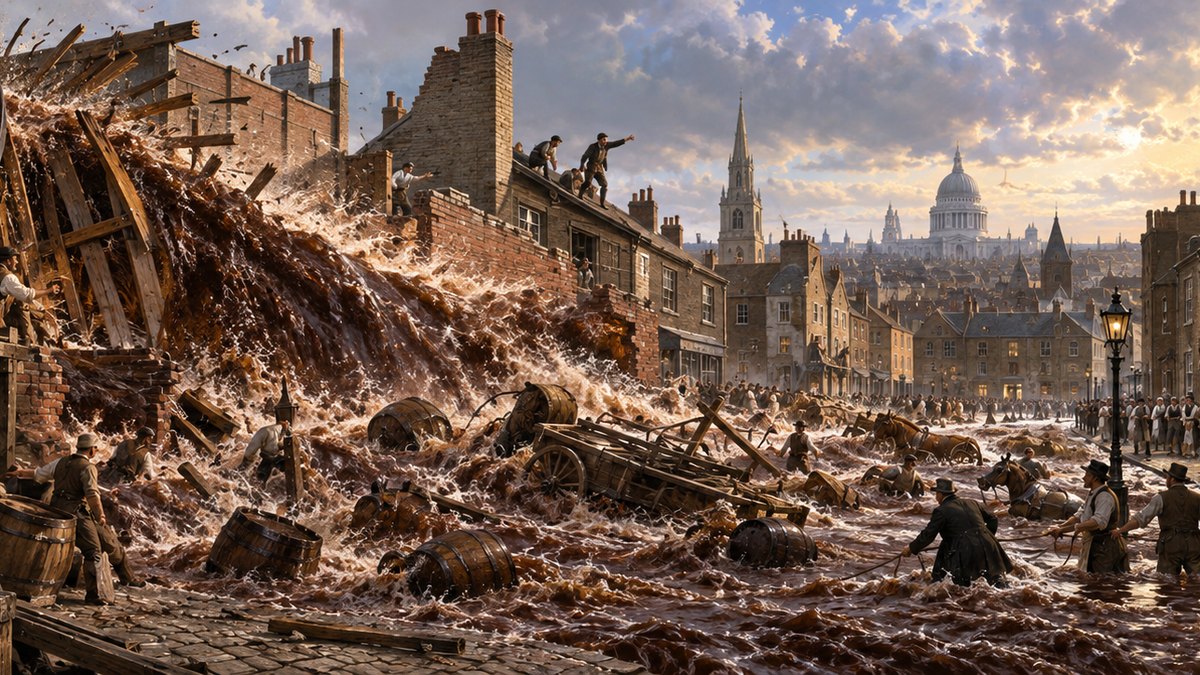
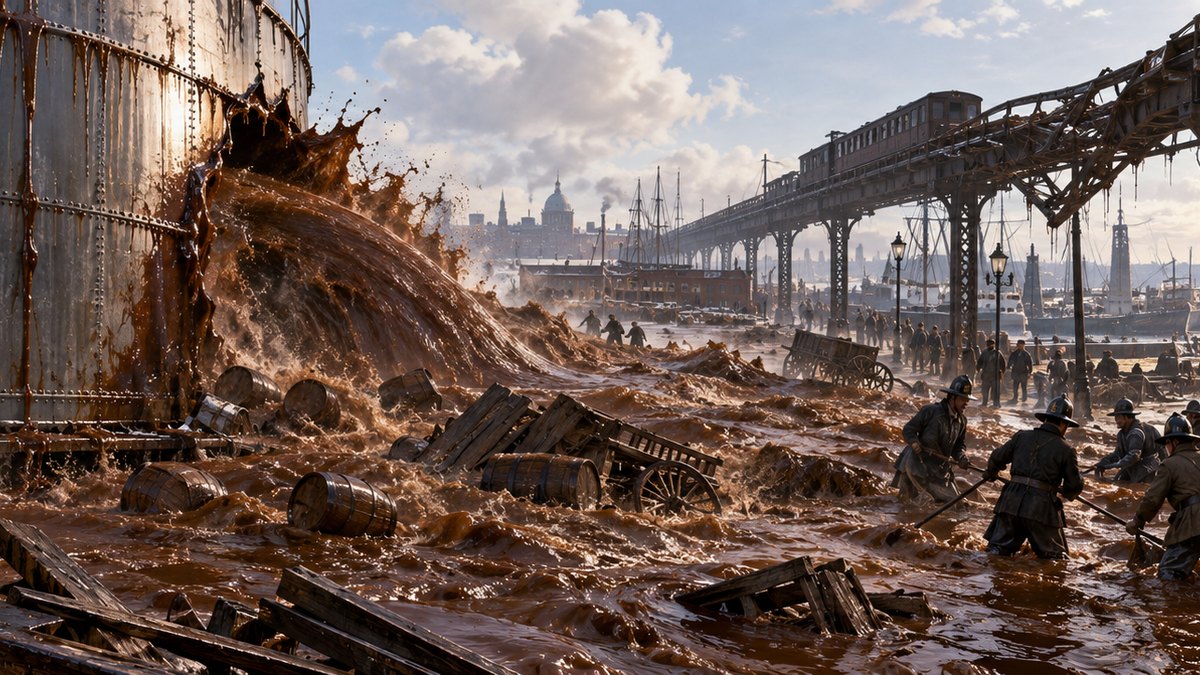
According to Boston city records and later engineering studies, the initial wave may have reached roughly 35 miles per hour and stood as high as 25 feet in places. It smashed through nearby structures, damaged the elevated railway, and swept people, horses, carts, and debris through narrow streets. Thick molasses then became harder to move through as it cooled.
The company blamed sabotage
United States Industrial Alcohol argued that anarchists had bombed the tank, a claim that sounded possible during a period of real political bombings in the United States. The lengthy court proceeding examined sabotage, fermentation, temperature changes, and structural failure. A court-appointed auditor ultimately rejected the bombing explanation and found the company responsible for the unsafe tank.
The engineering was worse than the legend
Researchers including civil engineer Ronald Mayville have found that the steel shell was too thin for the loads it carried and that riveted joints created weak points. The City of Boston also notes that the tank was built without adequate engineering oversight or proper testing. The disaster was not one freak crack. It was a system of design and inspection failures waiting for pressure to expose them.
The case helped change construction accountability
Historian Stephen Puleo argues that the litigation became an important step toward stronger expectations for professional engineering and building review. After years of testimony, the tank owner had to compensate victims and property owners. The case did not create modern engineering law by itself, but it became a powerful example of why large industrial structures need qualified designers, calculations, permits, and inspection.
Where this story comes from
The overview appears in the Wikipedia article “Great Molasses Flood.” A major primary source is the Massachusetts court record from the consolidated lawsuits against United States Industrial Alcohol, including testimony gathered during the hearings and the auditor’s findings. Those records preserve the competing explanations, engineering evidence, witness accounts, and legal decision that followed the disaster.
Why a shirt company tells this story
The molasses flood interests Boston locals, engineers, history teachers, industrial safety professionals, and people who collect stories that sound impossible but are completely real. A design might use the old tank silhouette, a North End street map, rivet patterns, or a simple 1919 date treatment. It can be printed or embroidered on one shirt with no minimum. Wearing local history can mean carrying a strange story, but also remembering the people and the safety lessons behind it.
Watch it on YouTube: A 25-Foot Wave Of Molasses Killed 21 People In Boston. Subscribe to GoatNut for the next one.
Frequently asked questions
How many people died in the Boston Molasses Flood?
Twenty-one people died and about 150 were injured when the molasses tank burst in Boston's North End on January 15, 1919. Buildings, street structures, vehicles, and sections of the elevated railway were also damaged.
How fast did the molasses flood move?
The initial wave has been estimated at up to about 35 miles per hour, with reports placing its height as high as 25 feet in some locations near the failed storage tank.
Why did the Boston molasses tank collapse?
Investigations pointed to structural failure, including steel that was too thin and weak riveted joints. The tank also lacked adequate engineering oversight and testing, while temperature and pressure changes likely contributed to the final rupture.
Or start with the art: free AI design tool + all free tools →