

 Your design here
Design it right now
Hoodie — with YOUR design on it
Upload art, type text, or let the AI design it — live preview, no minimums, pay over time, ships in 5–9 days.
Split eligible US orders into 4 interest-free payments with Shop Pay
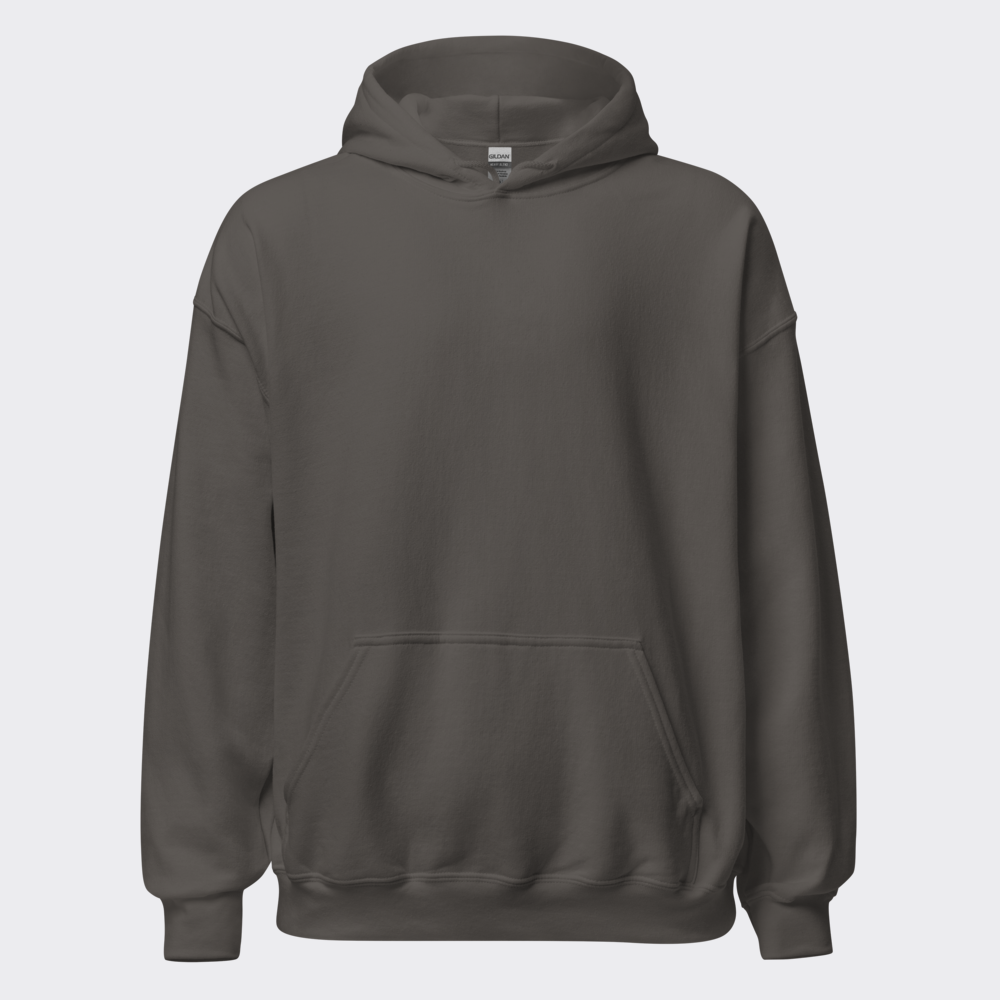
🎨 Put my design on this →Gildan 18500 · 50% pre-shrunk cotton, 50% polyester · 8.0 oz/yd² (271.25 g/m²) · blank sourced from Nicaragua · printed in the USA network · ships 5–9 days
Embroidery costs more per piece and usually less per year, because a printed logo on frequently washed workwear typically needs replacing before an embroidered one does. Ready to start? custom embroidery.
How do you compare them honestly?
On cost per year of service, not cost per garment. A printed polo that looks worn after eight months and an embroidered one that looks fine after two years are not the same purchase, even though the price tags suggest they are. For anything washed several times a week, the replacement rate dominates the initial price difference.
When does print still win on cost?
On garments that are not washed hard, on large multi-colour artwork that thread cannot reproduce, and on anything worn occasionally rather than daily. Event shirts, retail merch and graphic tees are all cases where print is both cheaper and better. The annual argument only applies to workwear.
What changes the maths here specifically?
The absence of digitizing and setup fees. Those fees are what usually make embroidery look disproportionately expensive on small orders, and without them the per-piece gap narrows enough that the durability advantage dominates almost immediately rather than only at scale.
Where each method wins on annual cost
- Embroidery wins - polos, aprons, caps, outerwear, anything washed weekly
- Print wins - event shirts, retail merch, graphic tees, occasional wear
- Embroidery wins - anything that must still look professional next year
- Print wins - large, detailed or many-coloured artwork
Is there really no minimum order?
None. One piece is a real order at normal pricing with no small-order surcharge. Traditional printers set minimums because screen printing and machine embroidery both carry a fixed per-job setup cost that has to be spread across enough pieces to be worth doing. Print-on-demand production has no per-job setup, so the reason for the minimum simply does not exist - which is why ordering one to check it before committing the budget is the standard advice here.
How does bulk pricing work?
It applies itself in the cart. Twenty or more of the same item takes 20% off, fifty takes 25%, and two hundred takes 30%. There is no quote form, no promo code and no sales call - the cart is the quote, so you can see the final per-piece number before anyone pays. Because these are print-on-demand costs rather than screen-printing setup, the discount is an honest reduction on the listed price instead of a marked-up retail figure being walked back.
Where to go next
Ordering one of each to compare directly costs two garments and no setup fees. See the durability comparison.
See the merch in real life
Real garments, printed and embroidered to order.
Frequently asked questions
Is embroidery cheaper over a year?
Usually, on frequently washed workwear, because replacement rate dominates the initial price difference.
When is print cheaper overall?
On event shirts, retail merch and large multi-colour artwork, and anything worn occasionally.
Why is embroidery expensive elsewhere?
Digitizing and setup fees, which we do not charge at any order size.
Can I compare both directly?
Yes. Order one of each - no minimum and no setup fee.
Which is better for caps?
Embroidery, almost always. Print does not sit right on a structured panel.
How fast does either ship?
5-9 business days made to order.
Pay-in-4 may be available for eligible US orders at checkout.
Or start with the art: free AI design tool + all free tools →


