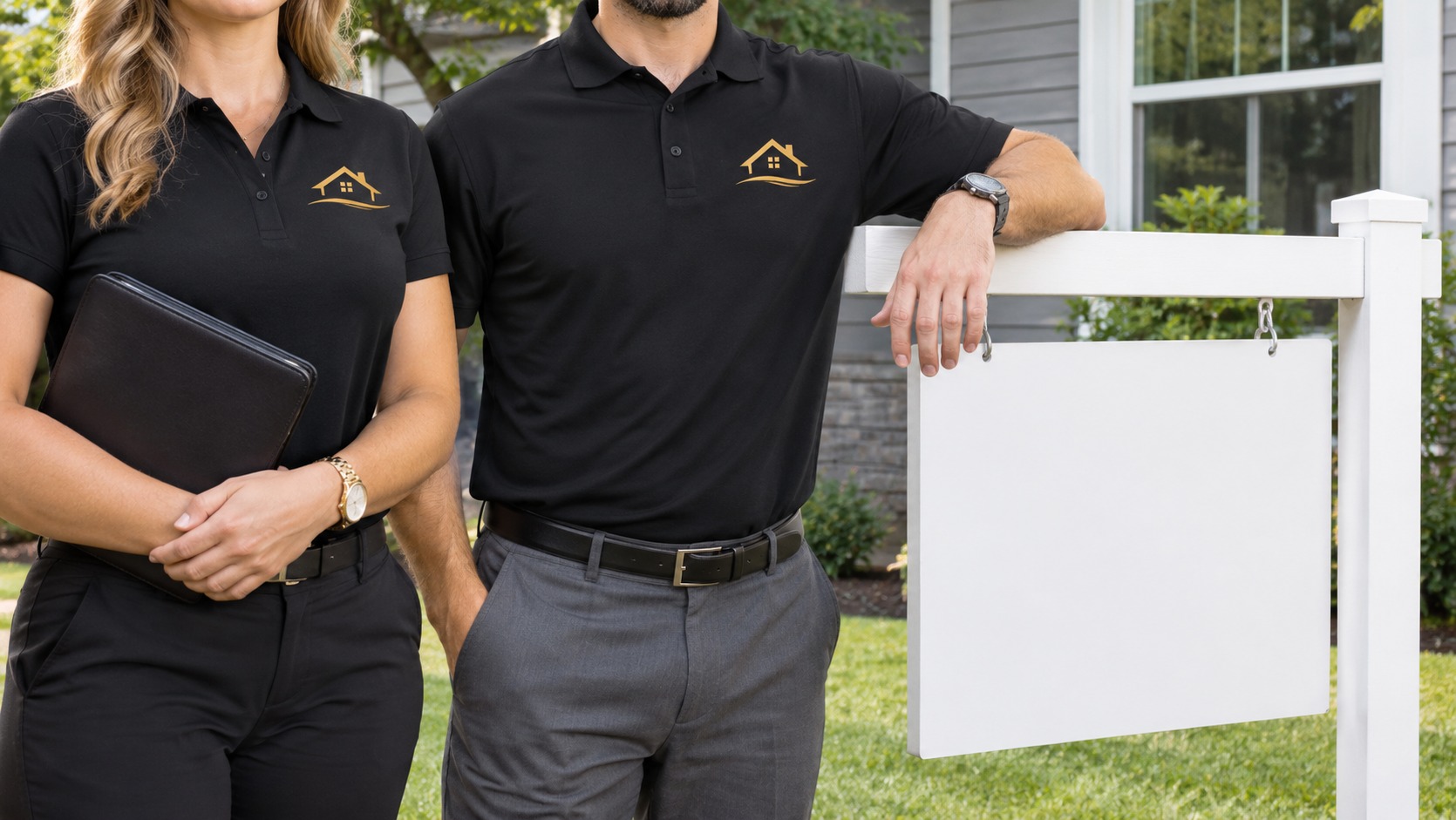
Printed logos crack and peel under commercial laundering because the print sits on top of the fabric, while embroidery is thread sewn through it - which is why hospitality apparel is almost always embroidered. Ready to start? custom restaurant uniforms.
What does commercial laundering do to a printed logo?
High temperature, aggressive detergent and repeated cycles attack the bond between print and fabric. On a garment washed several times a week - which describes almost every apron and front-of-house polo - a printed mark typically starts cracking within months. Embroidery has no bond to break because the thread passes through the weave.
Is embroidery actually cheaper over a year?
Often, yes, even though it costs more per piece. If a printed apron needs replacing twice as often as an embroidered one, the cheaper piece is the more expensive programme. That maths only works when there is no digitizing or setup fee inflating the embroidered price, which is the specific reason those fees matter so much on hospitality orders.
How do you kit a restaurant front to back?
One mark across different pieces by role: aprons for the floor, polos for the host stand, tees for the kitchen, caps where hair control is needed. Because there is no minimum, you order the mix your rooms actually require rather than the same garment for everyone, and replace individual pieces as staff turns over.
A front-to-back kit
- Aprons - embroidered, the single most-washed piece in the building
- Front-of-house polos - clean chest mark, colours that suit the room
- Kitchen tees - comfortable and cheap enough to give every cook three
- Caps and beanies - hair control that doubles as branding
- Outerwear - patio staff, delivery drivers and anyone working a door in winter
Is there really no minimum order?
None. One piece is a real order at normal pricing with no small-order surcharge. Traditional printers set minimums because screen printing and machine embroidery both carry a fixed per-job setup cost that has to be spread across enough pieces to be worth doing. Print-on-demand production has no per-job setup, so the reason for the minimum simply does not exist - which is why ordering one to check it before committing the budget is the standard advice here.
How long does it take to arrive?
Every order is made to order and ships in five to nine business days, and that window covers a single piece and a two-hundred-piece run alike - there is no separate multi-week queue for larger orders. For an event, order about two weeks ahead so there is room to check the first piece and distribute sizes.
Where to go next
Hospitality has high turnover, which makes single-piece reordering more valuable here than almost anywhere else. See the full embroidery versus print comparison.
A care routine that doubles the life of a uniform
- Wash printed tees inside out in cold or warm water.
- Skip bleach on anything printed; keep it for white towels.
- Hang dry or tumble on low. High heat is what ages prints fastest.
- Soak aprons with heavy grease before the main wash.
- Rotate: three tees per cook means each one sees fewer cycles.
Staff who wash at home appreciate a printed care card in the first bag. It takes one minute to write and saves real money over a year.
When to replace a uniform piece
Replace a piece when the collar curls, the fabric thins at the elbows or the apron pocket tears, rather than waiting for the logo to fade. Staff look sharper and the restaurant looks consistent when worn pieces leave the rotation on a schedule, such as every January and every July.
Colors by station
Dark colors such as black, charcoal and navy hide kitchen stains and suit the line. Front-of-house teams can carry a brand color, since they stay cleaner. Bartenders often do best in black, which hides spills under low light. Keep the same logo and the same position across every color so the team looks like one restaurant.
Plan the kit on our catering and restaurant uniforms page. Aprons start at $37.99, embroidered polos at $32.99 and tees at $16.99, and orders of 25 pieces or more ship free within the US. Opening soon? Read when to order uniforms for an opening.
See the merch in real life
Real garments, printed and embroidered to order.
Good to know
Frequently asked questions
Why does embroidery beat print for restaurant uniforms?
Commercial laundering breaks the bond between print and fabric. Embroidery is thread sewn through the weave, so there is no bond to break. Want to see it first? Try the logo shirt builder here.
Is there a minimum for restaurant uniforms?
No minimum. Order one apron or forty. Open the builder and try your idea on a work shirt.
Do you charge a digitizing fee?
No. No digitizing, setup, plate or per-colour fees. When you are ready, start your work shirt here.
Can we reorder single pieces as staff changes?
Yes, and hospitality is where that matters most. A replacement apron is a normal order and will match the others. See your idea on a work shirt here. It is free to try.
Can we order different pieces for different roles?
Yes - aprons, polos, tees, caps and outerwear all carrying the same mark. You can try it here: design your own work shirt.
How fast can we get uniforms for an opening?
made to order, 5-9 business days once production starts. For an opening date, order about two weeks ahead. Start your design here. It is free to try.
Pay in 4 usually starts around $35–$50. Monthly plans that can be $0 down usually start around $150.
Or start with the art: design it in our custom builder → · free AI t-shirt design generator
Keep reading
More from the journal