 Your design here
Design it right now
Classic Tee — with YOUR design on it
Upload art, type text, or let the AI design it — live preview, no minimums, pay over time, ships in 5–9 days.
Split eligible US orders into 4 interest-free payments with Shop Pay
🎨 Put my design on this →Gildan 5000 · 100% cotton · 5.0–5.3 oz/yd² (170-180 g/m²) · blank sourced from Honduras · printed in the USA network · ships 5–9 days
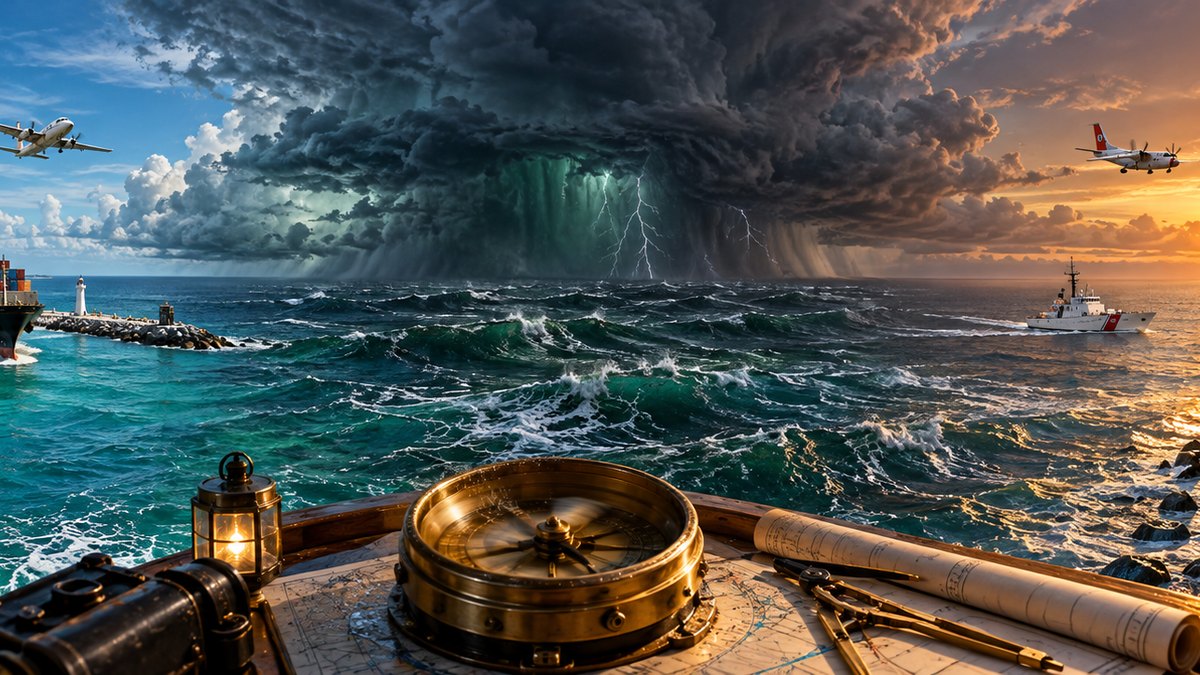
The Bermuda Triangle feels like a place you should be able to outline on a chart. You cannot. The legend grew from real accidents, but the borders, the name, and much of the mystery were created later by writers looking for a pattern.
The five things
There is no official triangle
NOAA says no official map defines the Bermuda Triangle, and the U.S. Board on Geographic Names does not recognize it as an official place name. Different authors draw different boundaries between Florida, Bermuda, Puerto Rico, and sometimes much farther beyond. That makes statistics slippery because changing the size of the triangle changes which accidents count.
The famous name is surprisingly recent
Writer Vincent Gaddis popularized the phrase “Bermuda Triangle” in a 1964 article for Argosy magazine called “The Deadly Bermuda Triangle.” Earlier writers had already collected stories about disappearances in the region, but Gaddis gave the mystery the memorable geometric label that stuck. The legend is therefore much younger than many of the shipwrecks later placed inside it.
Insurers do not treat it as a supernatural danger zone
NOAA says there is no evidence that mysterious disappearances happen there more often than in other large, heavily traveled parts of the ocean. Lloyd’s of London has also been widely cited as not treating the region as unusually hazardous. Insurance pricing follows measurable risk, so the lack of a special Bermuda Triangle category tells a quieter story than television documentaries often do.
Flight 19 became the legend’s centerpiece
The U.S. Naval History and Heritage Command records that Flight 19 was a routine training mission of five TBM Avenger bombers on December 5, 1945. Lieutenant Charles Taylor became uncertain about his position after the exercise, and worsening weather, fading daylight, navigation confusion, and fuel limits followed. The aircraft disappeared, and a search plane sent after them was also lost.
The Gulf Stream can erase clues quickly
NOAA points out that the Gulf Stream moves rapidly through the region and can produce sudden changes in weather. Floating debris from an accident can travel far from where a vessel or aircraft first went down. Deep water also makes recovery difficult. A missing wreck is emotionally powerful, but in a fast-moving ocean it is not evidence that something impossible happened.
Where this story comes from
The broad legend is covered in the Wikipedia article “Bermuda Triangle.” A useful primary source is the U.S. Navy’s surviving record of Flight 19, including radio traffic and the official investigation into the December 1945 disappearance. Those records show confusion and uncertainty in real time, long before the event was folded into a paranormal story.
Why a shirt company tells this story
The Bermuda Triangle belongs to sailors, pilots, travelers, map collectors, mystery fans, and teachers who like separating folklore from evidence. A design can use a navigation chart, compass rose, aircraft silhouette, or three simple coordinates without pretending the ocean breaks the laws of physics. That idea can be printed or embroidered on one shirt with no minimum. Sometimes the best thing to wear is a mystery that becomes more interesting when you know how the legend was made.
Watch it on YouTube: 5 Things Nobody Tells You About The Bermuda Triangle. Subscribe to GoatNut for the next one.
Frequently asked questions
Is the Bermuda Triangle a real place?
It is a popular name for a region of the western North Atlantic, but it has no official boundaries. Different writers define the triangle differently, and U.S. geographic authorities do not recognize it as an official place.
What happened to Flight 19?
Five U.S. Navy Avenger aircraft disappeared during a training flight on December 5, 1945. Navigation confusion, worsening conditions, darkness, and fuel exhaustion are central to the most likely explanation, but no wreckage has been conclusively identified.
Are more ships and planes lost in the Bermuda Triangle?
NOAA says there is no evidence that mysterious disappearances happen there more frequently than in other large, heavily traveled ocean areas. Weather, navigation mistakes, deep water, and strong currents can make accidents difficult to reconstruct.
Or start with the art: free AI design tool + all free tools →